
🎓Alumni🎓
Paige Van de Vuurst (She/her)
Past position: MSc & PhD Student

Paige Van de Vuurst McClure, graduated from the DEBY lab in 2024 after completing a Master’s degree and PhD. Her research focused on the biogeographic impacts of landscape and climate change on zoonotic diseases, with an emphasis on rabies virus in vampire bats. During her time in the DEBY lab, she was a student leader in both the Fish and Wildlife Graduate Student Association and the Virginia Tech Disability Alliance and Caucus, graduated with distinction, and received the Sally Bohland Award for Innovative Service. Paige is now a Visiting Assistant Professor at The George Washington University in the Geography and Environment Department in Washington DC.
Past position: Master's Student
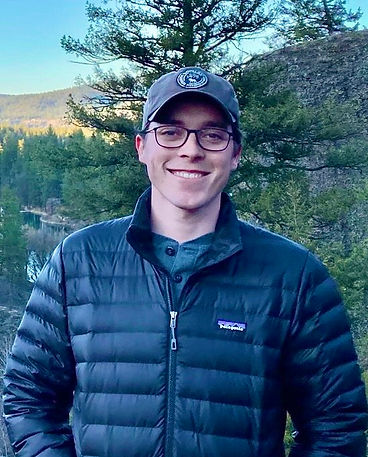
Master's thesis details: Steven's thesis research focused on predicting chronic wasting disease (CWD) risk and potential landscape connectivity among Virginia white-tailed deer populations using remote sensing data. His work also focused on understanding trends in epidemiological modeling for CWD.
Current position: PhD Candidate at Washington State University studying epidemiology of treponeme-associated hoof disease in elk
Mariana Castaneda-Guzman (She/her)
Past position: Master's Student
Her master’s research, working at Escobar Lab, allowed her to apply her engineering skills to problems of wildlife diseases and ecosystem dynamics under diverse climate change conditions using novel machine learning methods.
Currently, Mariana is a Ph.D. student at Virginia Tech in the Department of Fish and Wildlife Conservation. Her main interests are data analytics, including remote sensing and big data analysis, to inform and optimize strategic decisions related to ecosystem health and climate change adaptation in the private and public sectors. Mainly by applying modeling tools to reveal patterns from ecological data and developing simulations to test “what-if” scenarios of landscape and climate change.


Past position:
Postdoctoral researcher 2023-2024
Abdu was a postdoctoral researcher in the Escobar Lab whose work focused on the ecology and geography of hantavirus in wildlife reservoirs across North America. His research addressed a longstanding gap in understanding the biogeography of both hantavirus and its hosts—an important yet neglected area despite the substantial number of global cases, particularly affecting rural and Indigenous communities.
Abdu’s work contributed to a deeper understanding of pathogen emergence at the interface of environment, biodiversity, and public health.